

There's a question that gets asked a lot in creative AI circles right now, usually framed in some variation of: "Why does the water in AI videos still look wrong?"
The answer is deeply revealing. Understanding it explains why every major AI lab in the world has quietly pivoted to the same new obsession: world models.
Standard generative video models are, at their core, incredibly sophisticated pattern matchers. They've seen millions of hours of video. They know what water looks like, statistically speaking. But they don't know what water is. They don't understand that it flows downhill, that it has surface tension, that it displaces volume. They know the texture of the wave; they don't understand the ocean.
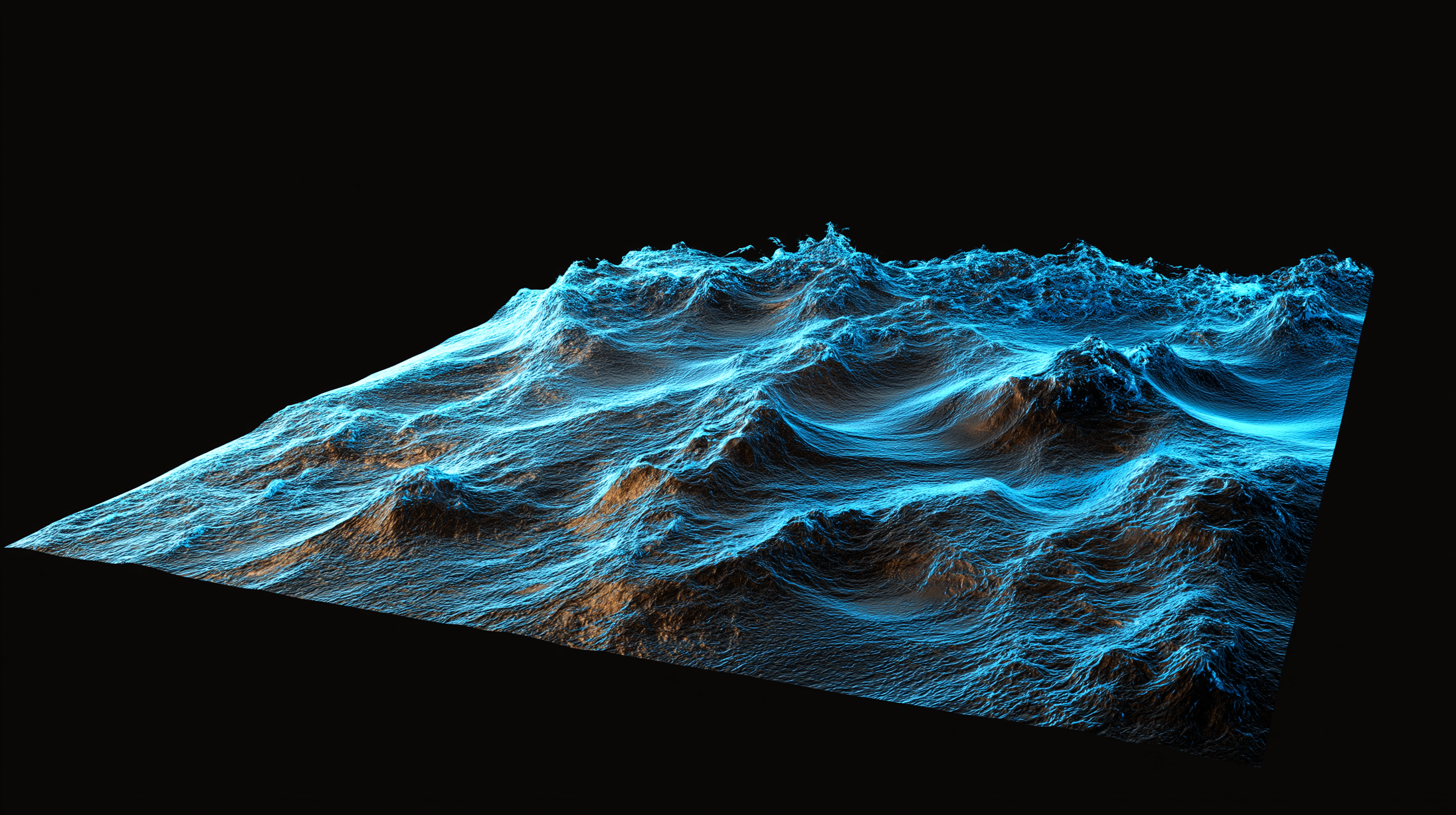
World models are the attempt to fix that. The race to build them is, right now, one of the most consequential things happening in AI. Not just for researchers, but for artists, sound designers, musicians, and anyone building in the creative space.
What a World Model Actually Is
The concept is almost intuitive once you hear it. A world model is an AI system that doesn't just generate a representation of reality; it builds an internal simulation of how reality behaves. It learns causality, not just correlation. It understands that if you push a glass off a table, it falls, shatters, and makes a sound specific to its material and the surface it hits. Not because it memorized that sequence, but because it has internalized something like the rules of the physical world.
For creative work, the implications are enormous. An AI that simulates the world doesn't just create plausible-looking content. It creates internally consistent content. Characters who move with real weight. Environments that respond to change. Light that behaves like light.

"We're not just trying to generate video anymore. We're trying to build a system that understands what it means for something to happen in the world."
The Four Horses
Runway GWM-1
Runway dropped their first world model, GWM-1, in December 2025. It represents the clearest signal of where the company is heading. Three variants ship with it: GWM Worlds, which generates explorable environments; GWM Avatars, which produces expressive conversational digital personas; and GWM Robotics, which predicts frame-by-frame physical dynamics for real-world robot training. The key distinction from their Gen-4.5 video model isn't just quality. GWM-1 reasons about what happens between frames, not just what a frame should look like given the previous one.
For filmmakers and visual artists, GWM Worlds is already being used to generate consistent location "bibles": fully navigable AI environments that can be re-entered from multiple angles without the temporal drift that plagues standard video generation. The Runway AI Festival 2026 showcased several short films built entirely inside GWM-generated environments, and the coherence was striking.
Google DeepMind Genie 3
Google's world model approach is more research-forward, but its creative implications are just as significant. Genie 3, announced in early 2026, generates real-time interactive environments at 720p/24fps from a single text prompt. Crucially, these environments are playable. You can move through them, and Genie 3 generates the next state of the world based on your inputs. It learns physics from observation rather than hardcoded rules, which means it can generalize to novel situations in ways that rule-based simulations cannot.
The creative use case is game design and interactive experience at a scale previously impossible for independent artists. A musician building an audiovisual installation could describe an environment and have Genie 3 generate an explorable world around their sound design, one that responds to visitor movement in real time.

NVIDIA Cosmos
Announced at CES 2025 and updated continuously through 2026, NVIDIA Cosmos is the most technically ambitious entry in the race. Trained on 200 million curated video clips, Cosmos-Predict2.5 unifies Text-to-World, Image-to-World, and Video-to-World generation in a single architecture. By January 2026 it had surpassed 2 million downloads, driven largely by the robotics research community who use it for simulating physical environments before deploying real hardware.

World Labs Marble
The most intriguing entrant is Marble, the first commercial product from World Labs, founded by Fei-Fei Li. Her ImageNet dataset arguably sparked the entire deep learning revolution. Marble shipped its first release in early 2026 and is already notable for its handling of spatial coherence: objects in Marble-generated worlds maintain consistent position, size, and lighting as you move around them. Li's stated goal is to give AI spatial intelligence, the ability to reason about three-dimensional space the way humans do effortlessly.
Why This Matters for Sound
World models that simulate physics don't just generate visuals. They model the acoustic properties of spaces. A room with hard surfaces, a forest with absorptive foliage, a tunnel with long decay: these are spatial properties that a physics-aware world model can, in principle, make audible. The integration of spatial audio into world model pipelines is a near-term development that every sound designer should be watching closely.
The Creative Opportunity (Right Now)

It would be easy to frame world models as a future technology, something that will matter in 2028. But several things are already accessible and worth experimenting with today:
- Runway GWM Worlds is available through the Runway platform for subscribers at higher tiers. Generation times are longer than Gen-4.5, but the consistency payoff is significant for environment work.
- NVIDIA Cosmos is open-weight and downloadable. It requires serious GPU resources to run locally, but cloud access is available through NVIDIA's developer program.
- Google's tools remain primarily research-accessible, but Veo 3.1 incorporates world model insights in its handling of multi-shot consistency and physics dynamics.
The practical advice: if you're generating video content for artistic or commercial projects right now, start paying attention to which tools feel internally consistent versus which merely look good in isolation. That distinction is the tell. The models that understand the world will increasingly win, not just on physics, but on the harder-to-articulate quality of presence. The sense that something is actually there.
The Bigger Picture

The world models race is being called the most important AI development since the transformer architecture. The reason isn't just capability; it's platform. Whoever builds the most accurate, most responsive simulation of physical reality will effectively own the substrate on which the next generation of creative tools is built. Games, films, immersive experiences, spatial audio, interactive art: all of it runs on a model of the world.
That's a bet worth watching very closely. And if you're building anything in the creative AI space right now, it's a bet worth making moves on before the race is won.
Read next: From Slop to Sotheby's — The Artists Defining What AI Creativity Actually Means.